
BLOG POSTS

Dolly: Lucky To Have Loved Her
Most people who get out of a place like that measure the distance. Look how far I went. That's the whole scoreboard. Dolly ran the other number. Look how far I went and look what I sent back.
Your Circumstances Are Not Your Fault. They Are Still Your Responsibility.
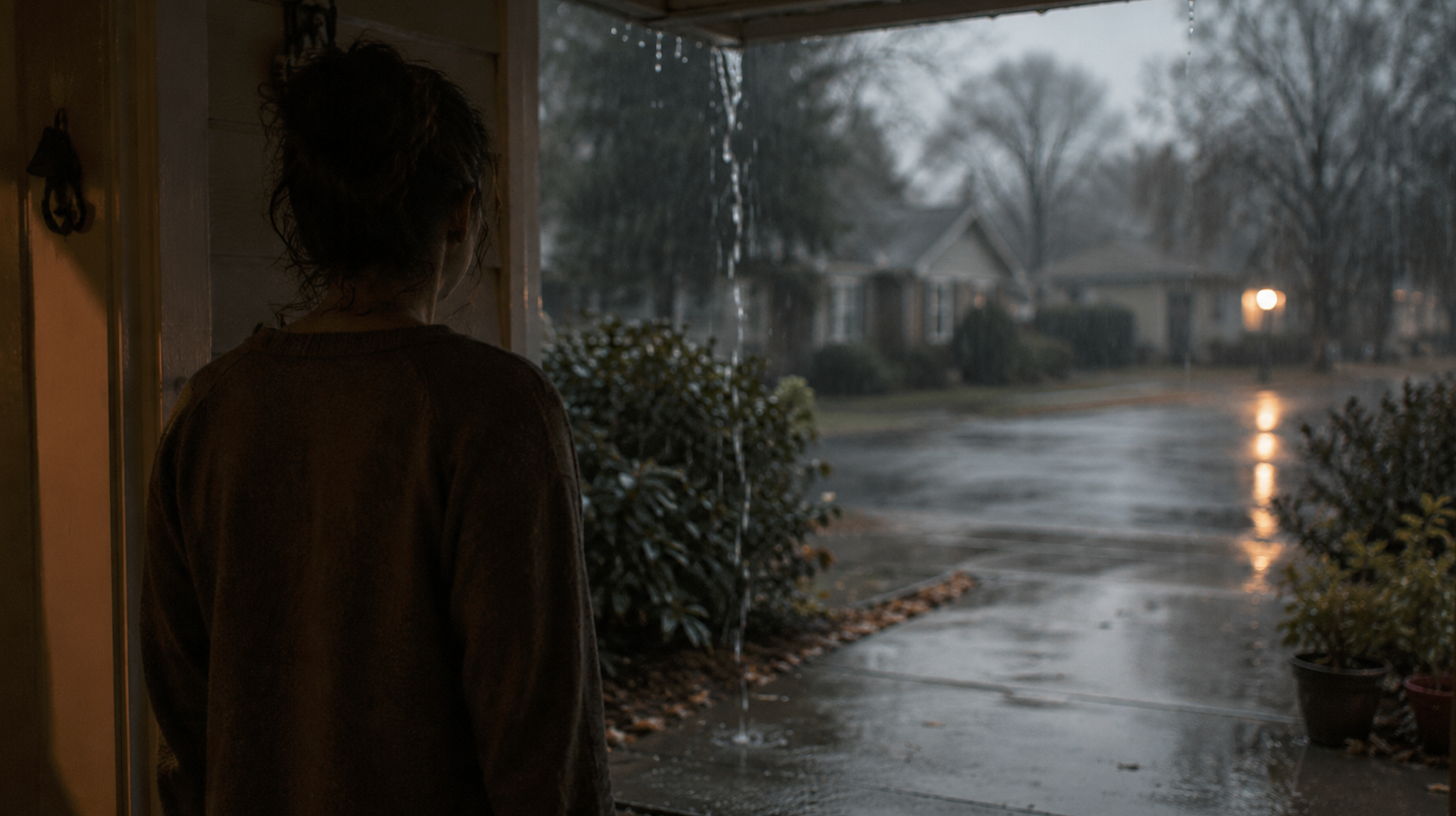
There was a stretch of my life where the same sentence kept showing up in my head. Why is this always happening to me.
Your circumstances are not always your fault. They are always your response-ability.

Four Sentences to Repair a Relationship When You'd Rather Be Right
"When there's a disagreement, it's me planting my feet and wanting to be right. And I am right. I am right from my perspective and from my current level of understanding. That's my truth in the moment, until I can understand where you're right also."
Two accurate accounts of the same event, built from two different sets of information and two different nervous systems. There is no evidence either person can produce that will dissolve the other person's experience. So the argument has no exit. It only has an exhaustion point.

How Lucky Am I? — The Question That Started All of This.
If you’ve read all twenty of these blogs, thank you. Not because we needed you to, but because it means something in you was ready to hear this. Ready to examine the stories you’ve been telling.
Ready to ask better questions. Ready to bet on yourself.
If this is the first blog of ours you’ve read, welcome. Start anywhere. Start with Blog 01 and the science of the RAS. Start with Blog 06 and the rehab lobby. Start with Blog 12 and the formula itself. Or start right here, right now, with the one question that has outlasted every framework and every certificate and every grand plan Jana and I have ever made.
Write it down. By hand. Today.
See what your brain finds.
And then come back tomorrow morning and ask it again.
What If You and Your Partner Did This Together?
That shared intention, practiced over years, has done something to us that I don’t think either of us fully anticipated when we started.
It made us fluent in each other.
When you and your partner both practice asking what you want to experience, how you want to grow, how you’d like to contribute, and how lucky you are — separately, then together — something changes in how you see each other. You stop assuming you know what the other person wants. You start asking. You stop filling in each other’s blanks with projections built from habit and start actually listening to what’s alive in the other person right now, today, in this season of their life.
That sounds simple. It is not common.
The practice of asking “what do you want to experience?” — genuinely, openly, as if you don’t already know the answer — is one of the most quietly radical things two people can do for a relationship.

Not a Journaler? Good. This One’s for You.
What I am going to do is offer you five ways to do this practice that have nothing to do with sitting down with a notebook and a pen and staring at a blank page. Because here’s what I know after two decades of coaching: the principle matters more than the medium.
The four questions workregardless of how you answer them. And if the way most people answer them doesn’t work for you, that’s not a problem with you. That’s just information about how you’re wired.
Let’s find your version.
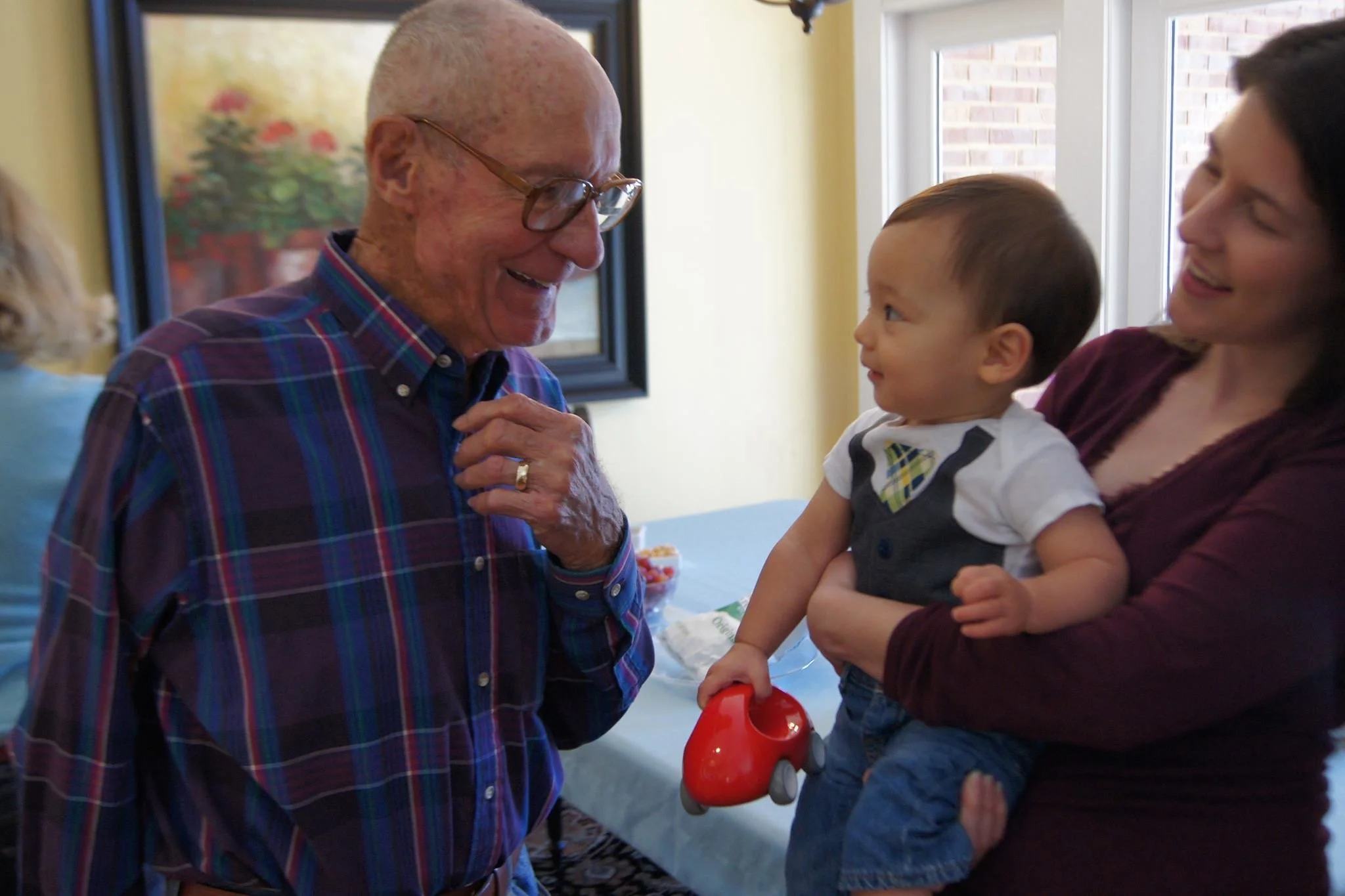
Jason’s Grandfather (Papa) Said the Same Word Every Single Morning. It Stuck.
His name was Rooster.
I don’t know the exact origin of the nickname. I just know that’s what everyone called him, that it suited him completely, and that no one who ever met him forgot him. My grandfather was the kind of person who changed the temperature of a room just by walking into it. Not because he was loud or demanding, though he could certainly hold a room. But because of the energy he brought.
Every single time. As if he’d decided somewhere along the way that walking through a door was an opportunity worth taking seriously.
Every morning, without fail, Rooster woke up and said the same thing.
“Boy, do I have Enthusimatism!”
Not enthusiasm. Not optimism. Enthusimatism.

Four Questions. Four Minutes.Here’s Exactly How It Works.
In the eleven blogs before this one, we’ve covered the science, the stories, the cost of not doing this, and the philosophy behind why it works. If you’ve been reading along, you already understand more about how your brain operates than most people ever will. You understand the RAS. You understand the compounding effect. You understand what unexamined days cost and what intentional ones build.
So here it is. The whole formula. Right up front. No more buildup.
4 Minutes a Day. What’s the Cost of Skipping It?
The unexamined pattern becomes the life you’re living on autopilot while the life you actually want keeps getting pushed to someday.
I’ve sat across from people in their fifties who are still carrying a story someone handed them when they were twelve. Not because they’re not intelligent or self-aware — they are both. But because nobody ever gave them a daily practice for looking at it. For putting it on a page and asking:
Is this still true?
Is this still serving me?
Is there a more empowered version of this story that is also true?
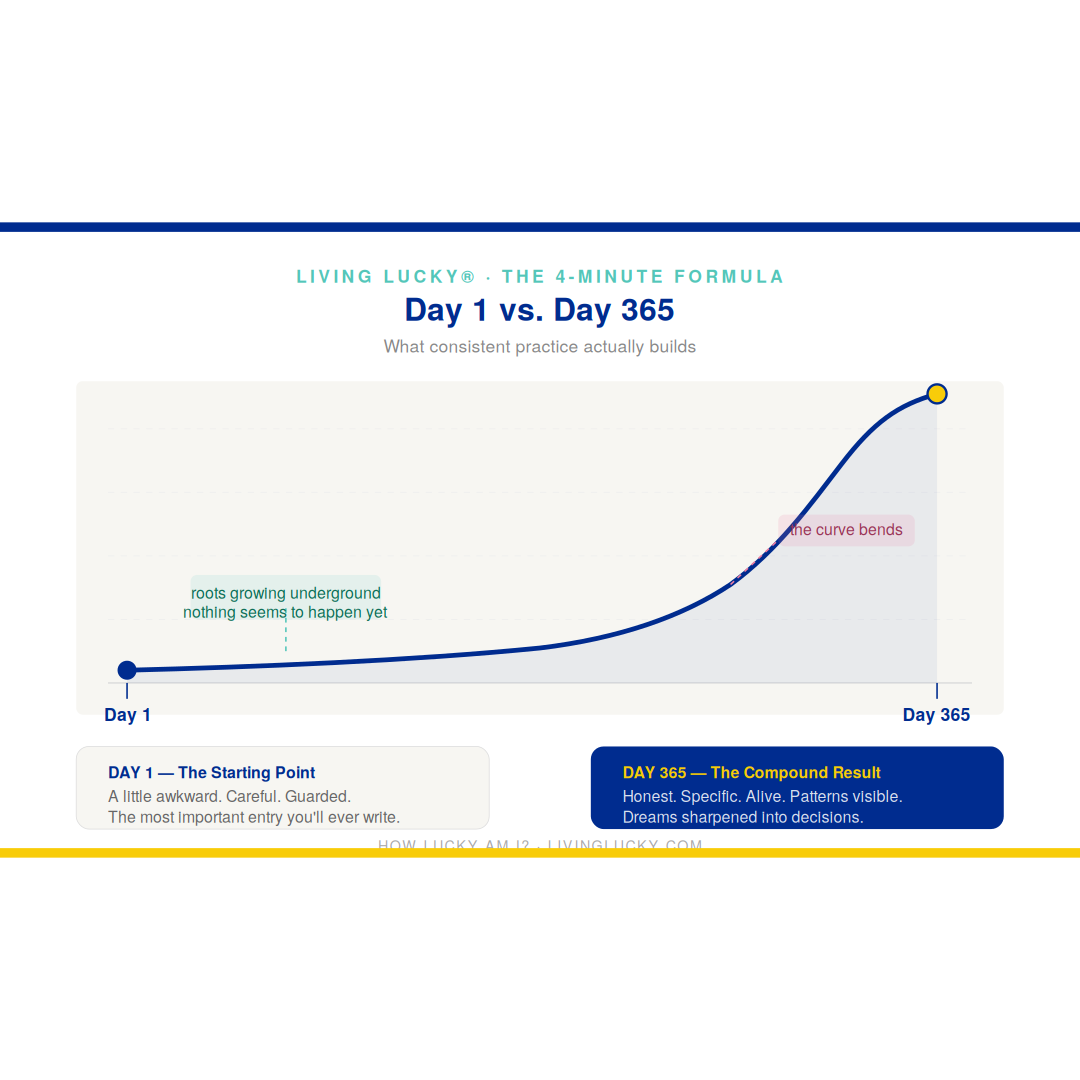
Day One Versus Day 365: What a Year of This Actually Looks Like
Here’s the thing about compound interest that most people understand in theory but underestimate in practice: the growth isn’t linear.
The first weeks of any practice feel almost imperceptibly small. You write your four questions, you go about your day, and it’s hard to point to something specific that changed. This is where most people quietly stop. Not with a dramatic decision to quit — just a morning where they skip it, and then another, and then the journal ends up in the drawer.
What they didn’t know is

Gratitude Isn’t a Buzzword. Here’s What It ActuallyDoes to Your Brain.
We know, we know. You've heard "just be grateful." But what if gratitude wasn't a feeling you waited for — what if it was a switch you could flip? Turns out, there's a lot of research on exactly that.

Why Writing by Hand Does Something Typing Never Will
You could type your thoughts. You could voice-memo them. But when your hand moves across a page and forms a word, something different happens in your brain. Science has a name for it. We just call it feeling it.

Your Brain Is Listening To Every Question You Ask It
There's a part of your brain — about the size of your little finger — that decides what you notice, what you miss, and what you attract. And you've been programming it your whole life. The question is: what have you been telling it to look for?

Stuck on the Hamster Wheel? It's Time to Get Off.
"There has to be more to life than this?"
The truth is, most of us are running on autopilot. We get stuck in the daily grind, the endless hustle, the "keep up with the Joneses" mentality. We chase external validation, searching for happiness in the next promotion, the bigger house, the more "likes" on our posts. S.O.S. — Shiny Object Syndrome. But what if there's a better way?

Choose Fulfillment: Escape the Drift
Imagine a life where your 9-to-5 feels more like a comfortable numbness than a fulfilling pursuit. You go through the motions, pay the bills, and tick off boxes, but somewhere deep within, a flicker of yearning persists. This, my friend, is the phenomenon of quietly quitting your dreams. Can you relate?