BLOG POSTS


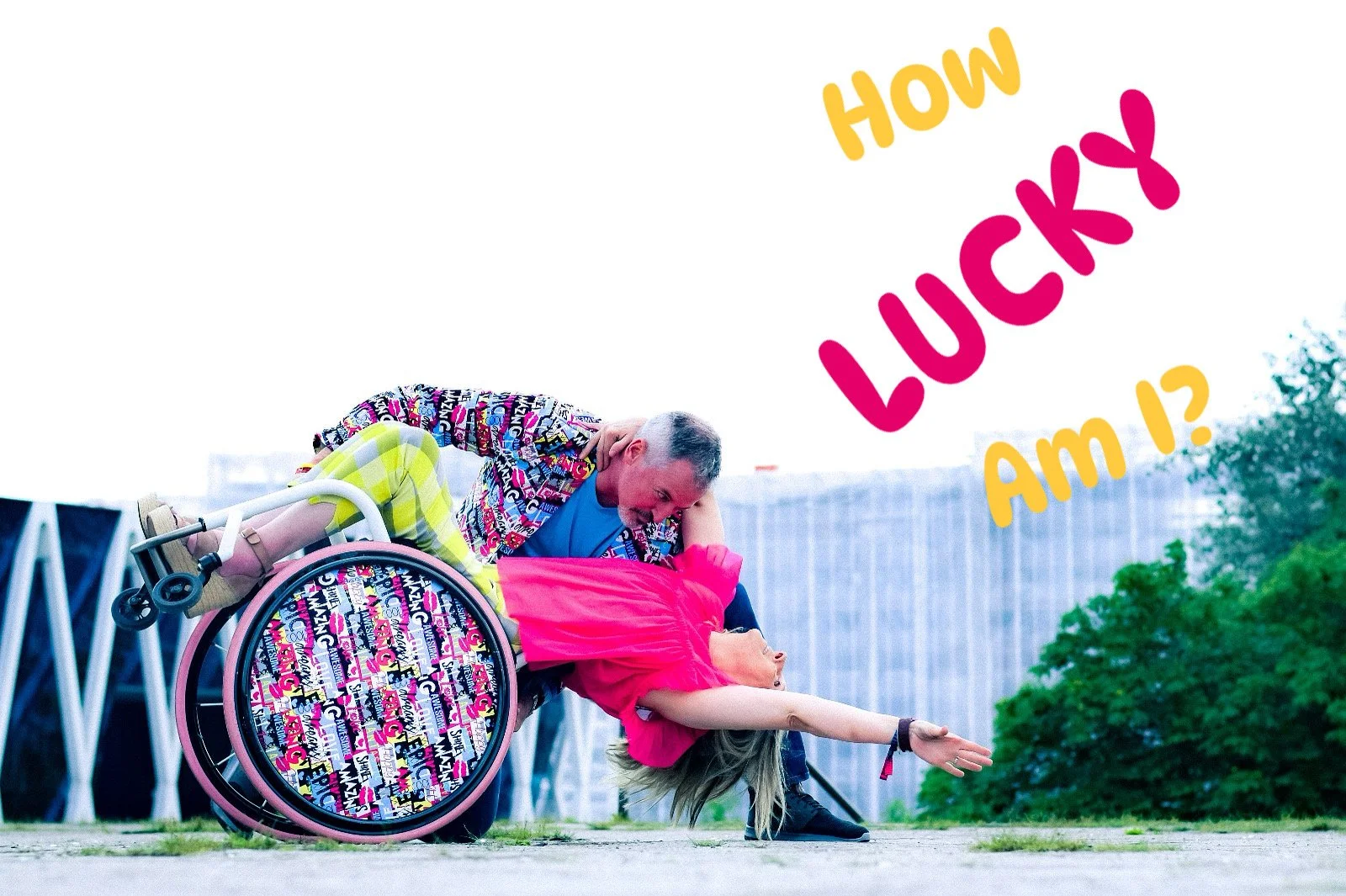
How Lucky Am I? — The Question That Started All of This.
If you’ve read all twenty of these blogs, thank you. Not because we needed you to, but because it means something in you was ready to hear this. Ready to examine the stories you’ve been telling.
Ready to ask better questions. Ready to bet on yourself.
If this is the first blog of ours you’ve read, welcome. Start anywhere. Start with Blog 01 and the science of the RAS. Start with Blog 06 and the rehab lobby. Start with Blog 12 and the formula itself. Or start right here, right now, with the one question that has outlasted every framework and every certificate and every grand plan Jana and I have ever made.
Write it down. By hand. Today.
See what your brain finds.
And then come back tomorrow morning and ask it again.
What If You and Your Partner Did This Together?
That shared intention, practiced over years, has done something to us that I don’t think either of us fully anticipated when we started.
It made us fluent in each other.
When you and your partner both practice asking what you want to experience, how you want to grow, how you’d like to contribute, and how lucky you are — separately, then together — something changes in how you see each other. You stop assuming you know what the other person wants. You start asking. You stop filling in each other’s blanks with projections built from habit and start actually listening to what’s alive in the other person right now, today, in this season of their life.
That sounds simple. It is not common.
The practice of asking “what do you want to experience?” — genuinely, openly, as if you don’t already know the answer — is one of the most quietly radical things two people can do for a relationship.

Not a Journaler? Good. This One’s for You.
What I am going to do is offer you five ways to do this practice that have nothing to do with sitting down with a notebook and a pen and staring at a blank page. Because here’s what I know after two decades of coaching: the principle matters more than the medium.
The four questions workregardless of how you answer them. And if the way most people answer them doesn’t work for you, that’s not a problem with you. That’s just information about how you’re wired.
Let’s find your version.
How to Ask Yourself a QuestionYour Brain Actually Wants toAnswer
Your brain cannot hold an open question and not try to answer it.
That is not a motivational statement. That is a description of how your neurology works. The moment a genuine question enters your conscious mind, your brain begins searching for a response. It cannot help it. It is built to seek completion. Psychologists call this the Zeigarnik effect — the brain’s tendency to fixate on unfinished things until they are resolved. An open question is, by definition, unfinished. So your brain works on it. While you’re driving. While you’re in the shower. While you’re trying to fall asleep.
This is either the most useful thing about your brain or the most exhausting, depending entirely on what question you left open.

Four Questions. Four Minutes.Here’s Exactly How It Works.
In the eleven blogs before this one, we’ve covered the science, the stories, the cost of not doing this, and the philosophy behind why it works. If you’ve been reading along, you already understand more about how your brain operates than most people ever will. You understand the RAS. You understand the compounding effect. You understand what unexamined days cost and what intentional ones build.
So here it is. The whole formula. Right up front. No more buildup.
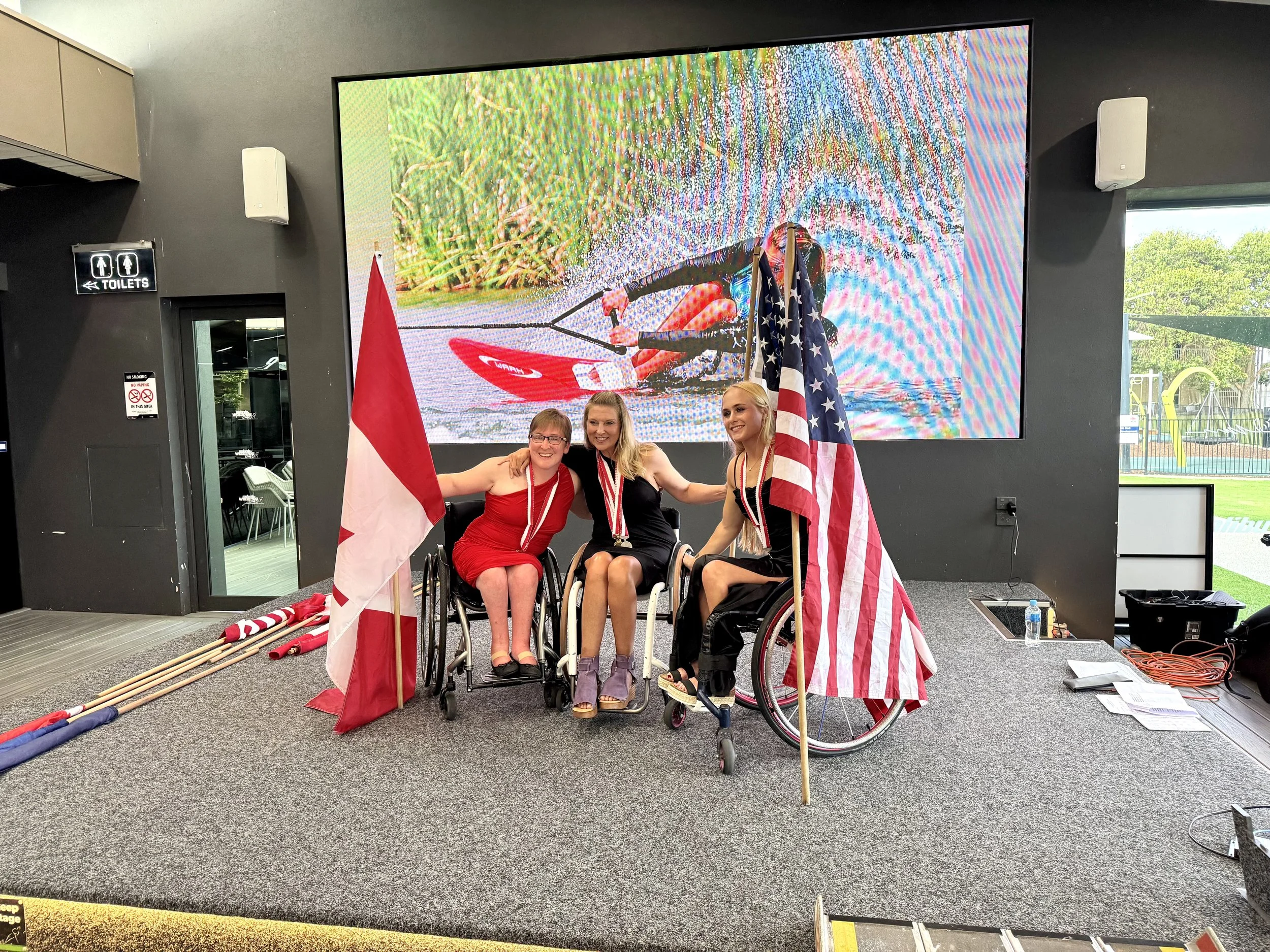
From Last Place to World Champion in 14 Months — Here’s the Part People Miss
In September 2024, at 49 years old, Jana entered her very first adaptive water ski competition.
She had been paralyzed for over three decades. She had won Paralympic gold. She had competed on the world stage in basketball. And she had never, not once, competed in adaptive water skiing.
She finished last. Not a close last. Last

The Questions That Work BetterThan “Why Did This Go Wrong”
There is a version of self-reflection that makes things worse.
Most of us know it well. Something doesn’t go the way we wanted — a conversation, a decision, a day, a season — and we sit with it and ask the question that feels the most natural: why did this go wrong? What did I do wrong? Why does this keep happening to me?
And then we answer it. In detail. With evidence. Our brain, which is very good at its job, builds a thorough and well-supported case. We replay the moment. We find the flaws. We catalogue the ways we fell short. We connect it to other times we fell short, because the brain loves a pattern and a pattern of failure is one it can construct quickly.
This is called rumination. And research is very clear on what it does: it keeps you stuck. Not in a motivating, productive, learn-from-your-mistakes way. In a circular, draining, nothing-changes way. Rumination feels like reflection. It is not. Reflection moves you forward. Rumination loops you back.
The difference between the two is not the topic. It’s the question.