Dolly: Lucky To Have Loved Her
Dolly: Lucky to have loved her…
Jana almost wore black on Tuesday.
She got as far as thinking about it, and then decided Dolly would have wanted pink.
That's about where we both were. Neither of us met her. Neither of us has any claim on her. And Jana couldn't function for most of an afternoon, and I got goosebumps talking about a woman I only ever saw on a screen, and I'd guess a few million other people had roughly the same day.
Dolly Parton died in Nashville on Tuesday, August 25, at 80, after a brief illness. Her nephew announced it. The Empire State Building went pink that night.
What it was actually like
Jana was around eight or nine when 9 to 5 came out.
She went home afterward and stole one of her grandmother's brassieres. Then she came out on the porch and performed.
She got the talk. We don't make fun of the way people are made. And then her grandmother, who had been laughing the whole time and couldn't hide it, said she figured Dolly would let it slide this time.
That's the thing about Dolly that's hard to explain to somebody who wasn't there for it. She wasn't just admired. She was imitated, by children, on porches, with props.
She said no to Elvis
Here's the story I keep thinking about this week, and I want to get it right, because the version that gets passed around is usually a little off.
Dolly wrote "I Will Always Love You" in 1973. It was a goodbye letter to Porter Wagoner, who'd given her a national break in 1967 and whose show she was leaving to go solo. It came out as a single in March of 1974 and went to number one on the country chart.
Then Elvis Presley wanted to record it.
She was thrilled. She told everybody she knew. They had an arrangement worked up and she was invited to come to the studio and watch him cut it.
The night before the session, Colonel Tom Parker called her. He explained that Elvis didn't record anything unless they got at least half the publishing.
She went quiet. Then she told him it had already been a hit, she'd written it, she'd already published it, and it was the most important copyright in her whole publishing company. It was what she planned to leave her family, her brothers and sisters and nieces and nephews. So she couldn't give up half.
Parker said then they couldn't record it. And they didn't.
She cried all night.
Eighteen years later Whitney Houston recorded it for The Bodyguard and it became one of the best-selling singles in history. Dolly still owned all of it. She put some of that money into a Nashville community and has referred to the property since as the house that Whitney built.
She was careful, later, about who she'd said no to. She didn't turn down Elvis. She turned down Colonel Tom Parker. Priscilla Presley told her that Elvis sang that song to her on the courthouse steps the day their divorce was finalized.
Pine fence posts
What people saw was the giggle and the wigs and the generosity and the jokes about her own appearance.
Jana started reading about her seriously around 2017, buying the books and watching the documentaries, and what she came away with was that the softness was possible because of what was standing around it. You do not survive fifty years in that industry as an unguarded person. Something has to be hard, or the business eats you.
I picture East Tennessee pine fence posts. Old ones, sunk deep, the kind that outlast the fence. Nobody's getting past those.
The warmth was real. So were the posts. Most people can manage one or the other.
The four questions
We ask four questions in our house. What do I want to experience, how do I want to grow, how do I want to contribute, and how lucky am I.
Dolly never heard of us and answered all four for about sixty years anyway.
What do I want to experience?
She left a steady job on a hit television show to find out what she could do on her own.
How do I want to grow?
Songwriter, then singer, then actor, then businesswoman, then a woman who built a theme park in her home county.
How do I want to contribute?
Free books mailed to children since 1995, and thirty years of money pointed back at East Tennessee.
How lucky am I?
She answered this one out loud, in public, for most of her life, and always sounded like she meant it.
The contribution one is where she leaves everybody else behind.
She started the Imagination Library in Tennessee in 1995 and it has been mailing free books to children ever since. She gave to Vanderbilt. She poured money back into East Tennessee, the specific hills she came out of, for decades.
She was one of twelve kids. Fourth born, right in the middle, which Jana relates to, since middle children spend a lot of energy on look at me and the answer is frequently that everyone is busy.
Most people who get out of a place like that measure the distance. Look how far I went. That's the whole scoreboard.
Dolly ran the other number. Look how far I went and look what I sent back.
What Jana's been sitting with
Jana's from a small town in Kansas and she's been circling a question lately about what she owes it.
Not guilt. Gratitude with somewhere to go. She'd tell you her childhood was close to a fairy tale, and I'd say the same about mine, and neither of us has done much with that beyond saying it fondly.
Dolly did something with it. Consistently, at scale, for fifty years, in the exact place that raised her.
That's a harder standard than most of us are using.
How lucky am I
I can't answer that one for Dolly, though she answered it constantly herself, out loud, in interviews, usually crediting God and sounding like she couldn't believe her own life.
Jana's answer, on the recording, through actual tears: she feels lucky to have gotten Dolly's music and her movies and her stories and her style and her laugh.
Mine is smaller. We're lucky we got to live while she was living. That's a real kind of luck and you don't get to pick it.
The part nobody can measure
Dolly never knew about the porch in Kansas.
She never knew a girl watched 9 to 5, went home, raided her grandmother's dresser, and put on a show. She never knew that girl grew up to compete for her country, or that she'd still be telling the brassiere story in her fifties, crying, on the day the news broke.
Multiply that by everyone. That's the part that gets me.
I keep a map. Nobody's seen it but us. Every person I've coached in a paid capacity gets a yellow banana dropped on their location, and every person who's reached out to say something in The Decision Matrix changed something for them gets a blue one.
There are a lot of bananas now. They're thick across the Midwest and the East Coast, there's a cluster over England and another across Europe, and there are a few sitting by themselves in places I've never been. I look at it more than I'd admit.
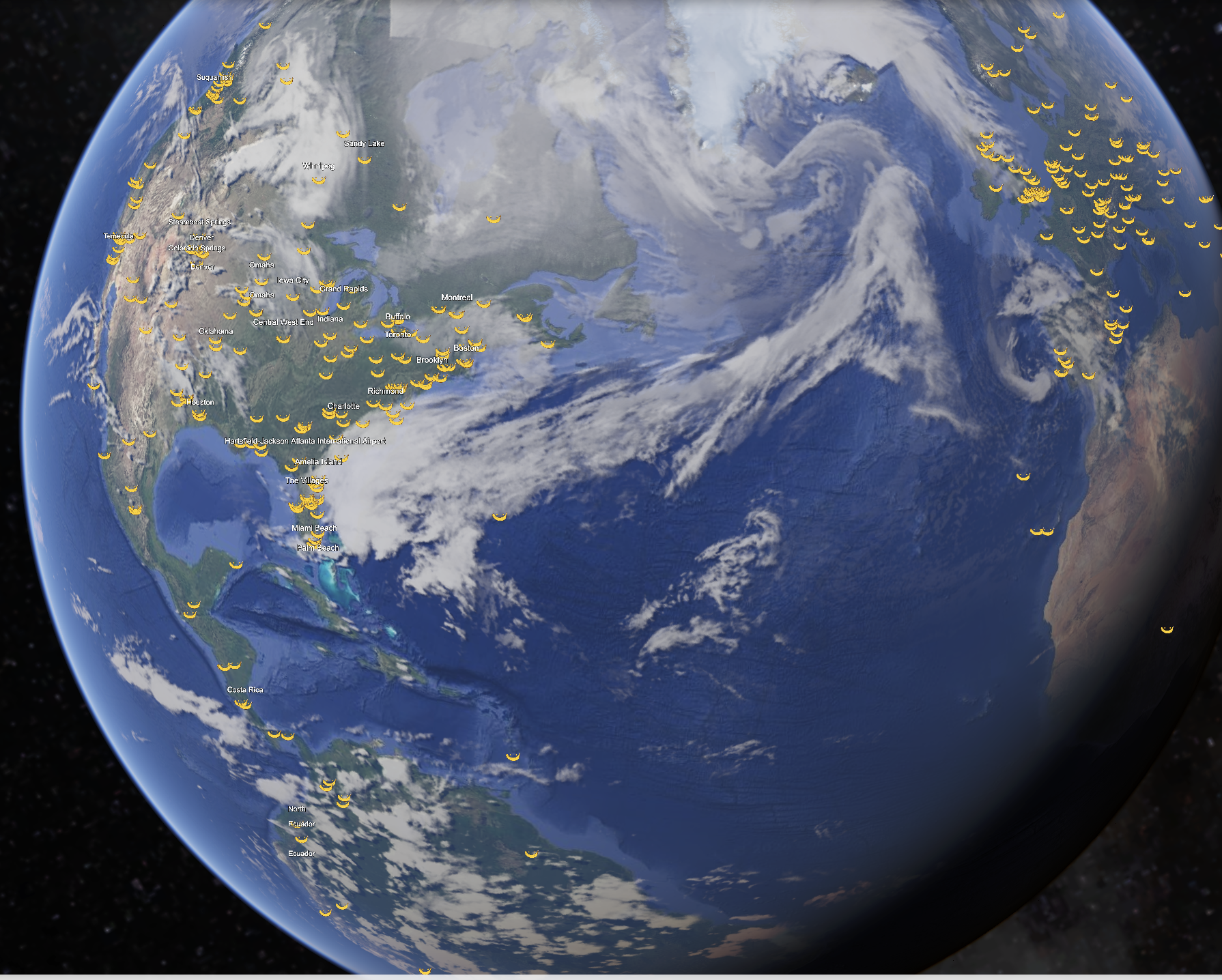
Yellow bananas for coaching clients, blue banana for people who have told me my book helped them(the blue didn’t quite show up on this version)
But the thing that taught me what a ripple actually looks like was the camper.
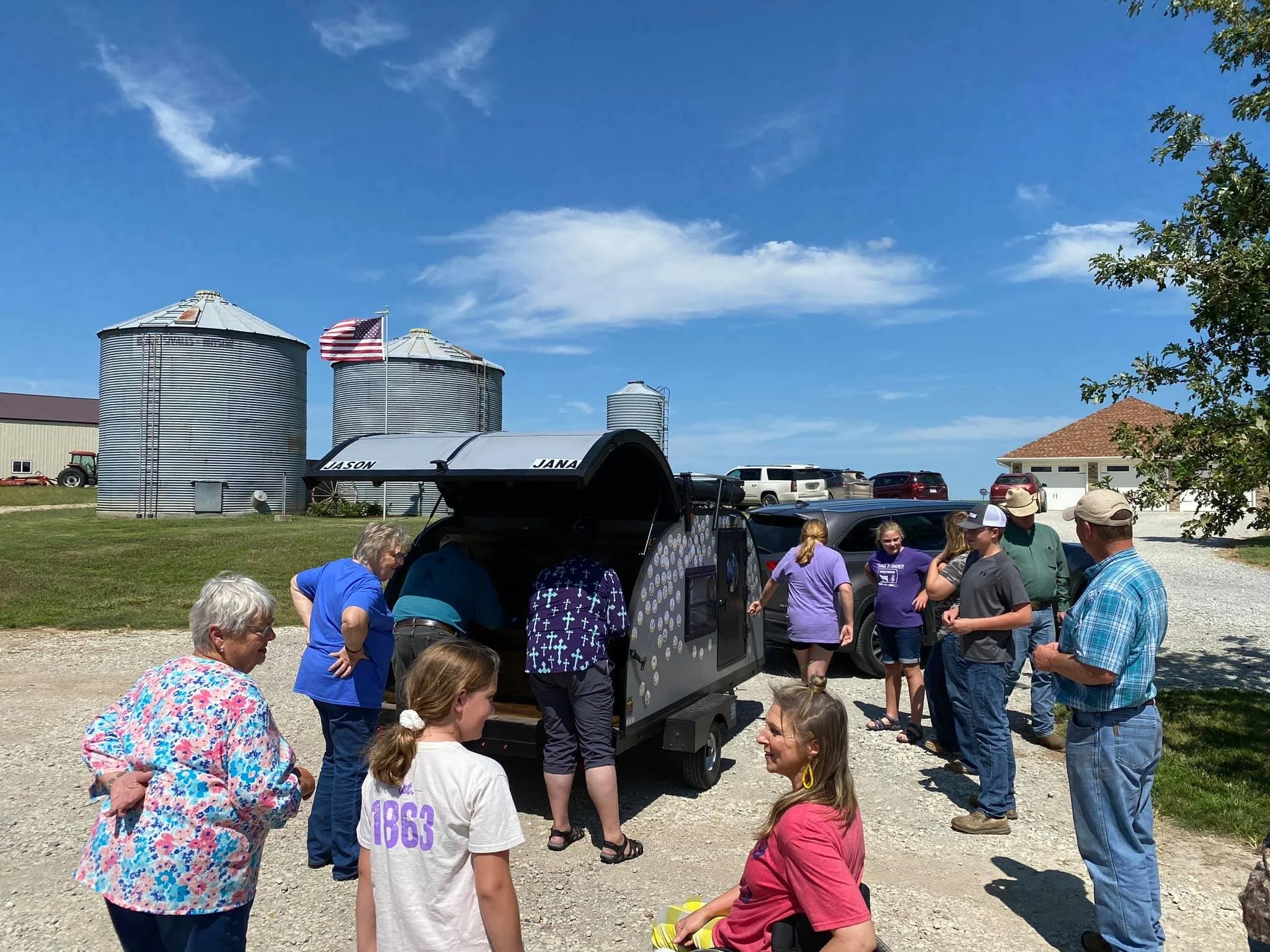
When the lockdowns were ending we hitched up a small teardrop camper and drove around asking people one question. What is your dream?
Underneath it I was asking something else, which is the question this whole practice is built on. If you were the luckiest person in the world, what would be happening in your life right now?
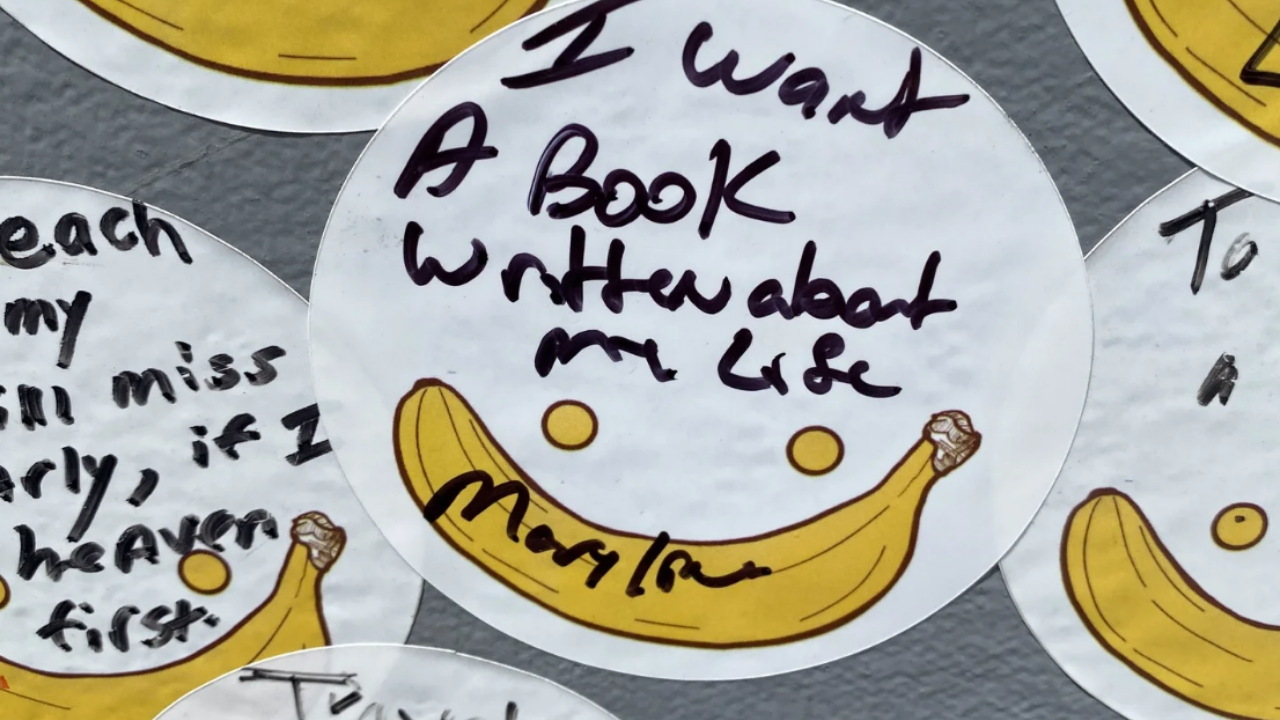
We handed people a round sticker with our banana on the bottom of it. They wrote their dream on it, pressed it onto the outside of the camper, and we asked them to take one small step toward it.
We collected about four thousand of them.
They covered that camper. Grocery store parking lots, driveways, a gravel lot in Kansas next to the grain bins. Kids and grandparents and people just passing through.
I've read every one. Some of them:
To be a paramedic. To manage a bakery. Awesome retirement. Own my own library with a ladder. Travel all 50 states. I dream of endless tacos. Be 6ft tall. To keep child-like faith and imagination. Complete the Camino de Santiago. Find a cure for cancer. To live each day as a glorious adventure. I want a book written about my life. I'm terminal, Harley trike before too late. Please protect me.
That's the range. Somebody wanted tacos and somebody was dying and both of them wrote it on the same camper on the same afternoon.
And then there's one I've never known what to do with.
At a state park one night, a woman wrote that her dream was to not be convicted of the four homicides she was facing charges for.
I don't know her name. I don't know how any of it turned out. We were parked about a hundred feet away in a camper with a door you could open with a firm look, and it got late, and we were unsettled in a way I'm not going to pretend we weren't.
But she was there and we were there, and nobody ever knows anybody's whole story. Ever.
I've thought about that night a lot this week, which surprised me. It's the Dolly part. If she'd been standing at that camper I think she'd have said bless her heart, and not the way we say it down here, where it means something else. The actual way. And then said something quiet for that woman and for the people she'd lost.
That's a harder thing to do than writing a check.
Within about ninety days, people started reaching back out. Some had gotten the thing. Some were closer. Some just wanted to tell us they'd started.
We have an internal number we're shooting for, which is ten million people Living Lucky®. Sometimes I think it sounds ridiculous and that I should check myself. Other times, what makes me think it's reachable is four thousand stickers on a camper, a map full of bananas, and eight years of watching what happens when somebody starts asking themselves better questions. When I see people around us start “Living Lucky” and showing up in the world for what’s possible, they world starts showing up for them and that new feeling is contagious.
Picture ten million people Living Lucky. Households, then streets, then towns. Nobody would be able to point at the cause. It would just be a place where people seem noticeably more alive.
Dolly did it with songs and free books.
The Living Lucky® Practice
Exercise: name one person who shaped how you thought life could go. Then find out whether they know.
Reflection question: what am I measuring, the distance I've come or what I've sent back?
Journal prompt: what did the place that raised me give me, and what has it gotten from me since?
Action: give something to where you're from this week. Any amount, any size, doesn't have to be money. Nobody has to know. What if it is just a call to a teacher, a talk to the freshman class at your high school, or cleaning up a local park the next time you’re home for the holidays.
Frequently asked questions
Why did Dolly Parton refuse to let Elvis Presley record "I Will Always Love You"?
Elvis's manager, Colonel Tom Parker, called the night before the session and said Elvis didn't record anything without at least half the publishing. Dolly refused, saying it was the most important copyright in her publishing company and what she intended to leave her family. The recording was canceled. She has said she cried all night, and she has been clear that she turned down Parker rather than Elvis.
What happened to the song after that?
Whitney Houston recorded it for The Bodyguard in 1992 and it became one of the best-selling singles ever released. Because Dolly kept her publishing, she kept the income from it, which she has described as buying a property in Nashville she calls the house that Whitney built.
What is the Imagination Library?
A literacy program Dolly launched in Tennessee in 1995 that mails free books to children. It expanded well beyond Tennessee and has been running for three decades.
How did she stay warm in an industry that hard?
She built boundaries and kept them, which is the part people miss when they only see the sparkle. Refusing Elvis's manager is the famous example, and the pattern held across her career, from her publishing to her image to her private life.
What does giving back to where you're from have to do with luck?
You didn't build the place that built you. Recognizing that tends to produce gratitude, and gratitude with an action attached to it becomes contribution. Dolly ran that loop for fifty years in the same set of hills.
One more thing
Jana said something on the recording that I've been carrying since.
We don't just live by chance.
Dolly came out of a family of twelve in the hills of East Tennessee with no obvious path to any of it. Nobody handed her a career. She wrote something like three thousand songs, said no to the King of Rock and Roll's manager when saying yes would have been easier and more flattering, and spent the back half of a very long life mailing books to children.
She created a lot of luck. Then she spent most of it on other people.
We're lucky we got her.
We Create Our Luck®.
We went deeper on this on the Living Lucky® Podcast, Season 11, Episode 26.