BLOG POSTS

Why You Can't Hear It From the People Who Love You
Somebody who loves you has been telling you the same thing for years and it goes right through you. Then a stranger says it once and it lands like a struck bell. That is not a flaw in your marriage. It is how distance works, and once you see it you can stop being surprised by it.

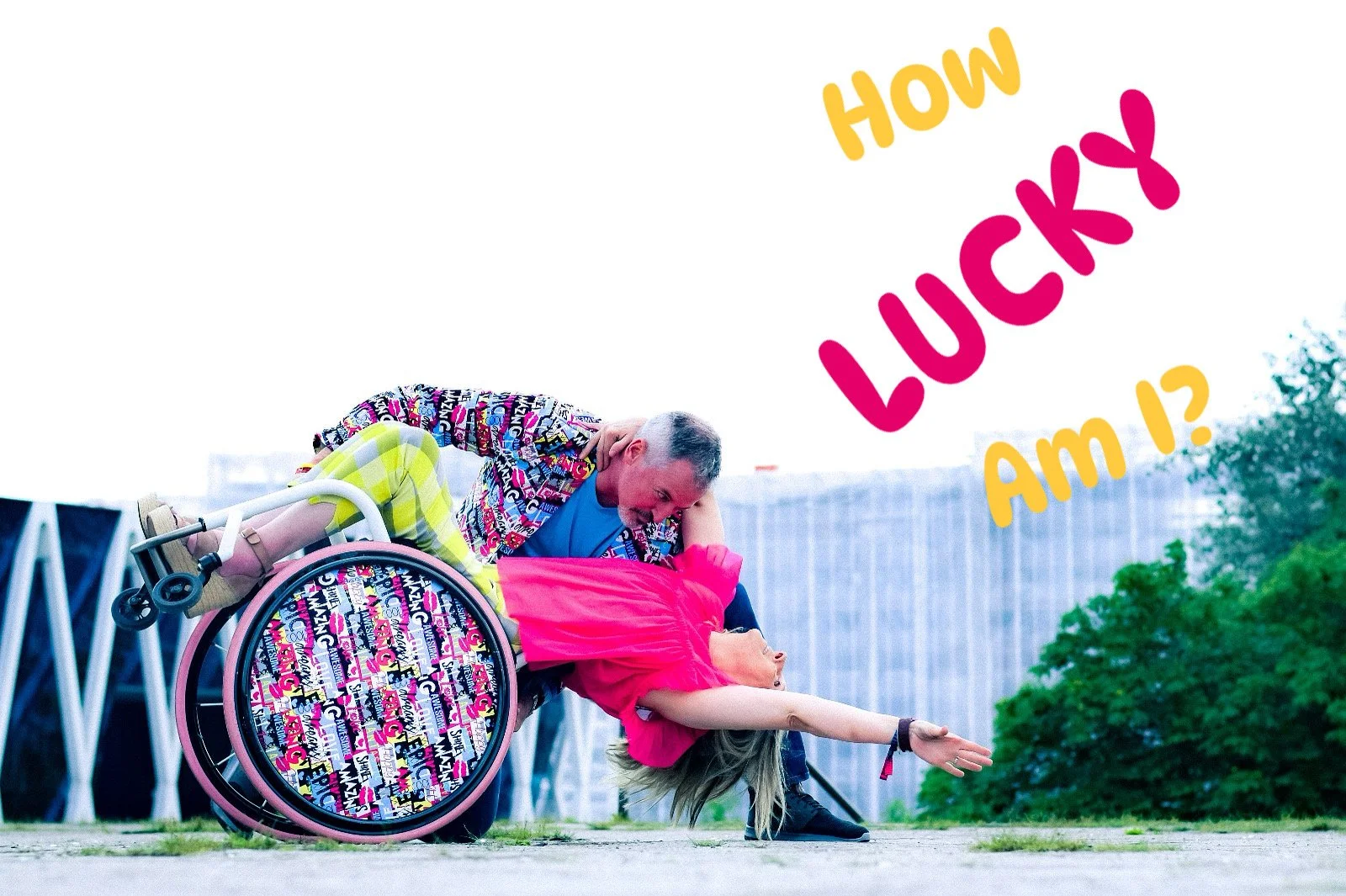
How Lucky Am I? — The Question That Started All of This.
If you’ve read all twenty of these blogs, thank you. Not because we needed you to, but because it means something in you was ready to hear this. Ready to examine the stories you’ve been telling.
Ready to ask better questions. Ready to bet on yourself.
If this is the first blog of ours you’ve read, welcome. Start anywhere. Start with Blog 01 and the science of the RAS. Start with Blog 06 and the rehab lobby. Start with Blog 12 and the formula itself. Or start right here, right now, with the one question that has outlasted every framework and every certificate and every grand plan Jana and I have ever made.
Write it down. By hand. Today.
See what your brain finds.
And then come back tomorrow morning and ask it again.
How to Ask Yourself a QuestionYour Brain Actually Wants toAnswer
Your brain cannot hold an open question and not try to answer it.
That is not a motivational statement. That is a description of how your neurology works. The moment a genuine question enters your conscious mind, your brain begins searching for a response. It cannot help it. It is built to seek completion. Psychologists call this the Zeigarnik effect — the brain’s tendency to fixate on unfinished things until they are resolved. An open question is, by definition, unfinished. So your brain works on it. While you’re driving. While you’re in the shower. While you’re trying to fall asleep.
This is either the most useful thing about your brain or the most exhausting, depending entirely on what question you left open.

Four Questions. Four Minutes.Here’s Exactly How It Works.
In the eleven blogs before this one, we’ve covered the science, the stories, the cost of not doing this, and the philosophy behind why it works. If you’ve been reading along, you already understand more about how your brain operates than most people ever will. You understand the RAS. You understand the compounding effect. You understand what unexamined days cost and what intentional ones build.
So here it is. The whole formula. Right up front. No more buildup.

From Last Place to World Champion in 14 Months — Here’s the Part People Miss
In September 2024, at 49 years old, Jana entered her very first adaptive water ski competition.
She had been paralyzed for over three decades. She had won Paralympic gold. She had competed on the world stage in basketball. And she had never, not once, competed in adaptive water skiing.
She finished last. Not a close last. Last

The Questions That Work BetterThan “Why Did This Go Wrong”
There is a version of self-reflection that makes things worse.
Most of us know it well. Something doesn’t go the way we wanted — a conversation, a decision, a day, a season — and we sit with it and ask the question that feels the most natural: why did this go wrong? What did I do wrong? Why does this keep happening to me?
And then we answer it. In detail. With evidence. Our brain, which is very good at its job, builds a thorough and well-supported case. We replay the moment. We find the flaws. We catalogue the ways we fell short. We connect it to other times we fell short, because the brain loves a pattern and a pattern of failure is one it can construct quickly.
This is called rumination. And research is very clear on what it does: it keeps you stuck. Not in a motivating, productive, learn-from-your-mistakes way. In a circular, draining, nothing-changes way. Rumination feels like reflection. It is not. Reflection moves you forward. Rumination loops you back.
The difference between the two is not the topic. It’s the question.
You’re Not Stuck. You’re Just Telling Yourself aStory That Says You Are.
“You’re not stuck. You’re telling yourself a story that says you are. And the story feels so true that you’ve stopped looking for the exit.”
That usually lands somewhere uncomfortable. Which means it’s usually right.
Every belief you hold about yourself and your life started as a sentence. Someone said it out loud — a parent, a teacher, a coach, a friend, an enemy — or you said it to yourself in a moment of pain or disappointment or fear. And somewhere along the way, you stopped questioning it and started living it.

The Thing About Patterns Is — You Can’t See Them While You’re in Them
Ever feel like you keep ending up in the same situation, different year? Same job frustration, same relationship dynamic, same stuck feeling? There's a reason for that. And there's a way out of it.

Why Writing by Hand Does Something Typing Never Will
You could type your thoughts. You could voice-memo them. But when your hand moves across a page and forms a word, something different happens in your brain. Science has a name for it. We just call it feeling it.
What Happens to Your Body When You Don’t Deal With Your Thoughts
Most people think stress is just a feeling. It's not. It's a chemistry experiment happening inside you right now. And the thoughts you haven't looked at yet? They're running the experiment.
The Body Keeps the Score. You don’t have to believe me. Ask Dr. Bessel van der Kolk, M.D.

Your Brain Is Listening To Every Question You Ask It
There's a part of your brain — about the size of your little finger — that decides what you notice, what you miss, and what you attract. And you've been programming it your whole life. The question is: what have you been telling it to look for?